

How an Eye Exam Can Help Explain Frequent Headaches While Reading
How an Eye Exam Can Help Explain Frequent Headaches While Reading
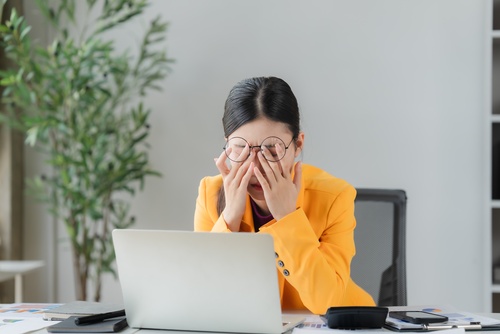
A headache that starts halfway through a report or after reviewing spreadsheets can interrupt your workday. For professionals in Charlotte, long stretches of reading may bring an underlying vision problem into focus. At Vision Source Studio 20/20, we help determine whether your prescription, focusing ability, or eye coordination could be contributing to frequent headaches while reading.
Why Reading Can Trigger Eye Strain
Reading requires your eyes to maintain focus at a close distance. Uncorrected farsightedness, astigmatism, or an outdated prescription can make that task more demanding. Presbyopia, the age-related loss of near focusing ability, can also cause headaches and difficulty reading small print.
Glasses that work well for driving may not provide the support you need for a laptop or printed documents. We consider your actual working distances when evaluating your vision.
Clear Vision Does Not Tell the Whole Story
Seeing letters clearly on an eye chart does not necessarily mean your eyes work comfortably together. During reading, both eyes must turn inward and maintain alignment.
Conditions such as convergence insufficiency can make close work difficult, even when distance vision is sharp. Symptoms may include headaches, intermittent double vision, or losing your place. Tell us about these concerns so we can determine whether additional eye coordination testing is appropriate.
What We Look for During an Eye Exam
An eye exam for reading-related headaches starts with your symptoms and health history. We review your prescription, examine your eye health, and assess focusing and eye coordination as indicated. We may also evaluate dryness or irritation that adds to reading discomfort.
For our Charlotte patients, details about the workday help guide the evaluation. Before your appointment, note:
How soon headaches begin after reading or using a screen
Whether symptoms occur with printed pages, digital screens, or both
Any blurred vision, double vision, burning, or tired eyes
Whether breaks reduce discomfort
Which glasses or contact lenses you use for work
Bring your current eyewear and an estimate of the distance between your eyes and your monitor.
Matching Recommendations to Your Workday
Depending on our findings, we may recommend an updated prescription, lenses suited to reading or computer distances, or care for dry eye. If your symptoms suggest a focusing or coordination problem, we can discuss further evaluation or referral.
Small workspace changes may also help. Increase text size, reduce glare, and take regular breaks from close work. The 20-20-20 rule offers a simple reminder: every 20 minutes, look about 20 feet away for 20 seconds.
When Headaches Need Medical Attention
An eye exam cannot explain every headache. Recurring, worsening, or changing headaches should also be discussed with your primary care clinician. Seek emergency care for a sudden, severe headache or a headache accompanied by vision loss, weakness, or difficulty speaking.
If headaches are interrupting your reading or workday, schedule an eye exam with Vision Source Studio 20/20 in Charlotte, NC. Call our University office at (704) 295-0123 or our Ballantyne office at (704) 295-4444 to arrange your visit.
Services
Learn More
Keep In Touch
Contact UsVisit Us Our Locations
(704) 295-4443
Ballantyne is currently booked until 2027, but you can call or text us to get added to the waitlist!
Hours
- Monday8:00am - 5:00pm
- Tuesday8:00am - 5:00pm
- Wednesday8:00am - 5:00pm
- Thursday10:00am - 7:00pm
- Friday8:00am - 1:00pm
- SaturdayCLOSED
- SundayCLOSED

(704) 510-9239
Hours
- Monday8:00am - 5:00pm
- Tuesday8:00am - 5:00pm
- Wednesday8:00am - 5:00pm
- Thursday10:00am - 7:00pm
- Friday8:00am - 1:00pm
- SaturdayCLOSED
- SundayCLOSED

© 2026 Vision Source Studio 20/20. All rights Reserved. Accessibility Statement - Privacy Policy - Sitemap
Managed and Designed By
